
Show Notes
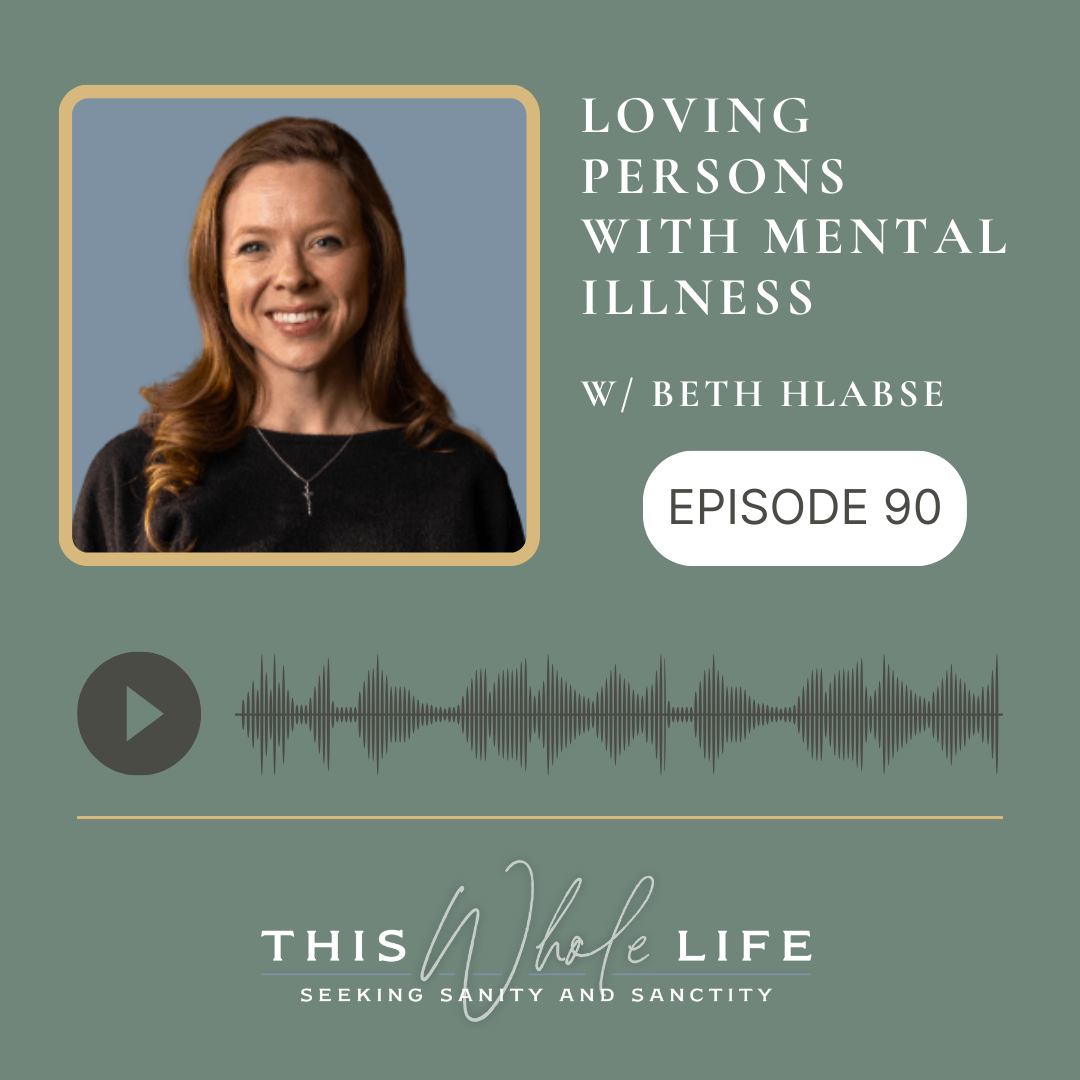
Episode 90. Loving Persons with Mental Illness
Episode 90. Loving Persons with Mental Illness
"But a Samaritan traveler who came upon him was moved with compassion at the sight."
~ Luke 10:33
How can I better support my loved one who suffers with mental illness?
What is the Church's place in caring for those with mental illnesses?
Is it possible to choose my responses instead of just reacting?
In episode 90, Kenna & Pat welcome Beth Hlabse, program director of the Fiat Program on Faith and Mental Health at the University of Notre Dame, for an honest conversation about loving and supporting people with mental illness. Drawing on personal stories, professional expertise, and Catholic teaching, the episode explores the complexities of mental health through the lens of accompaniment, compassion, and community. Beth shares practical wisdom for churches and families, highlighting the importance of seeing the gifts and goodness of every person beyond their diagnosis, setting healthy boundaries, and moving from reactive to responsive support. Listeners are invited to reflect on their own biases and discomfort, discovering pathways to deeper empathy, hope, and belonging—especially in faith communities. Whether you’re walking this journey yourself or supporting someone you love, this episode offers encouragement and tangible steps toward stronger, more healing connections.
Beth Hlabse is the program director for the Fiat Program on Faith and Mental Health at the McGrath Institute for Church Life at the University of Notre Dame. As a mental health counselor, Beth has provided therapeutic care for adolescents and adults with histories of trauma and adverse child experiences. Beth graduated from the University of Notre Dame in 2011 and she obtained her masters in clinical mental health counseling from Divine Mercy University. Beth and her husband Pete live in South Bend, Indiana.
Show Notes
Learn more about the Fiat Program on Faith & Mental Health at the University of Notre Dame’s McGrath Institute for Church Life
When the Lord invites us to reflect on the parable of the Good Samaritan, the Samaritan cares for the man to the extent that he is able. He acts according to his ability, to the bounds set by Christ. And he acknowledges that there are ways that others are called to support the victim as well.
As Christians, we know and believe that “your good is bound up in my good.” When a brother or sister suffers, we suffer.
When looking at the existence of mental illness in a loved one, it is tempting to begin with analysis. But we will never be able to uncover one single cause of mental illness in a person’s life.
It is not helpful to look to the past in resentment or blame. But it can be helpful to look to the past to gain the insight to move out of stuck places.
There can be a way that we use our faith to protect against coming close to those experiencing mental illness.
Hope and Healing: A Pastoral Letter from the Bishops of California on Caring for those who Suffer from Mental Illness Addressed to All Catholics and People of Goodwill
“We recognize that the experience of serious or chronic mental illness is unique and should not be trivialized; yet, when we address, this issue we need to overcome an attitude of “us” and “them,” which separates us one from another. Anyone may struggle with mental health problems; some require clinical attention or special forms of assistance. Even those who attend to the needs of others, including the pastors of the Church, are “wounded healers”: each of us is imperfect before God and in need of Christ’s redemptive grace.”
It’s important to pay attention to our own experience when in relationship with those presenting the symptoms associated with mental illness
So often, isolation is one of the contributing factors of mental illness, and the illness itself can further be profoundly isolating
"…loneliness is both a cause and consequence of mental illness."
Thomas Insel, former director of the National Institute for Mental Health
Can you, and your church, extend a hand of invitation & hospitality to actively welcome persons with mental illness into the community of faith?
The Lord has entrusted us with stewardship over one another.
Respond instead of react.
“Freedom is the space between stimulus and response.”
Viktor Frankl
Challenge By Choice
In the evening, maybe during an examen, notice your experiences throughout the day
“Lord, help me to see this experience of being in strong emotion in a way that is guided by your truth.”
Notice your physiological response, what was happening in your body.
Pay attention to the emotions that were being indicated by your body’s sensations.
Notice the thoughts that were associated with that situation during the day. Were your thoughts racing, cloudy, negative, hopeful?
How did I react in that moment?
What would it look like to move to a posture of responding instead of reacting?
Move from reacting to responding
Reflection Questions
For personal reflection or group discussion
What is one specific thing that stuck with you from this conversation?
When have you encountered others with mental illness? What has come up in you?
Have you experienced the danger of identifying someone, or yourself, merely as a diagnosis? Why does this happen and what might we do differently?
How do you understand and hold boundaries in difficult relationships?
How might you move toward a habit of responding rather than reacting?