
Show Notes
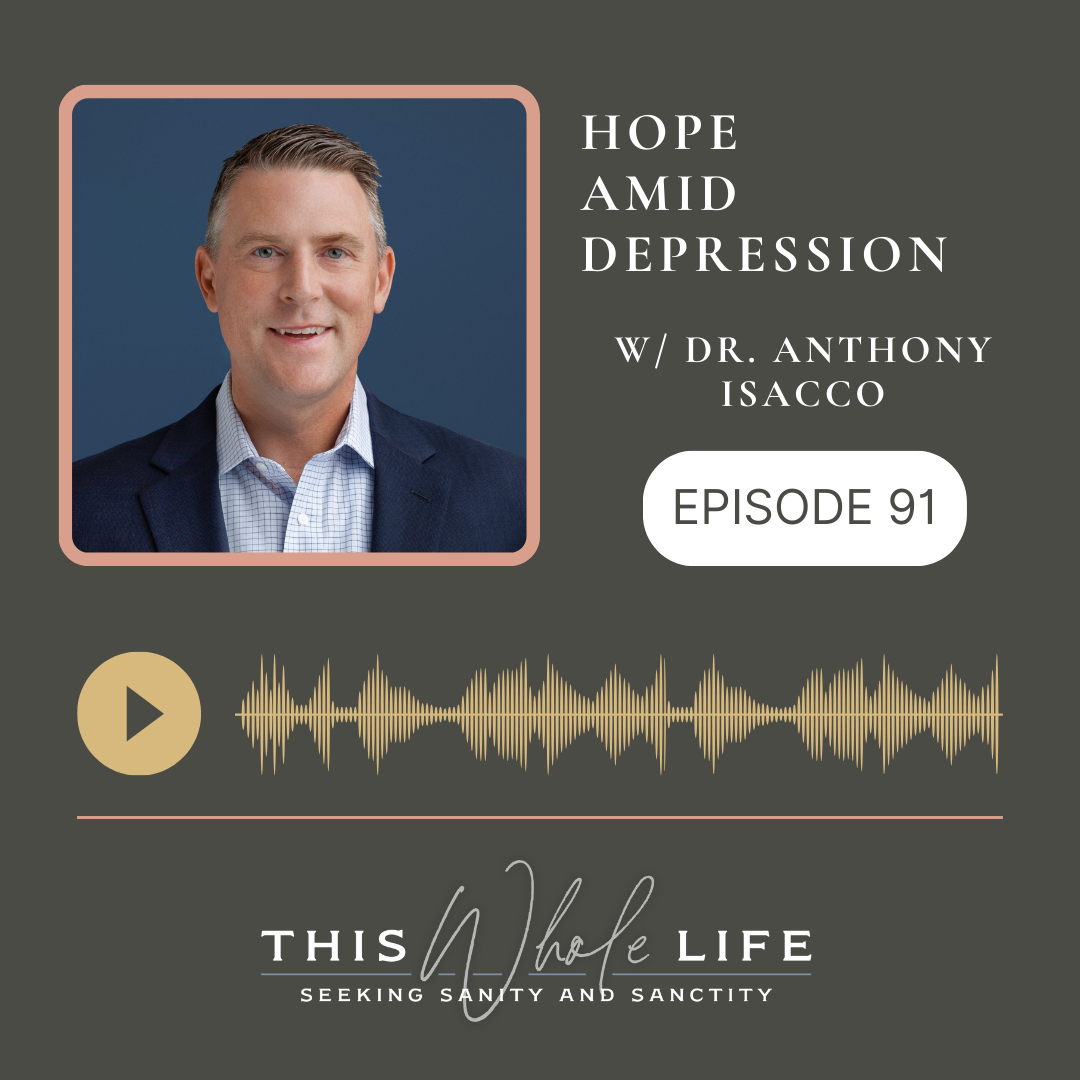
Episode 91. Hope Amid Depression w/ Dr. Anthony Isacco
Episode 91. Hope Amid Depression w/ Dr. Anthony Isacco
“The Lord is close to the brokenhearted, saves those whose spirit is crushed.”
~ Psalm 34:19
Is it a sin to be depression?
Is depression really able to be treated and healed?
How can I help my loved one who is suffering with depression?
In the first ever episode of This Whole Life recorded in front of a LIVE audience, Pat is joined by Dr. Anthony Isacco to dive into the realities of depression—what it is, how it affects individuals and families, and its complex relationship with faith. The conversation explores common misconceptions, clinical symptoms, and ways to distinguish normal sadness from major depressive disorder. Listeners will find hope as Dr. Isacco shares evidence-based approaches for healing, emphasizing the power of behavioral activation, social connection, and integrated spiritual practices. Full of relatable anecdotes and practical advice, the episode stresses that depression is treatable and offers tangible steps for listeners to support themselves or loved ones. Whether you’re seeking understanding as a parent, friend, or clinician, this episode delivers empathy, science, and faith in one thoughtful package.
Anthony Isacco, PhD is program director, professor, and head of clinical research in the new MS in clinical psychology program at Saint Mary’s University of Minnesota. He is a licensed psychologist and is the principal of a small private practice focused on helping clergy, seminarians, and women religious live healthy, holy, and happy lives in their vocations. He is a graduate of Franciscan University of Steubenville (BA), Boston College (MA), and Loyola University of Chicago (PhD). Dr. Isacco lives in Pittsburgh, PA with his wife and four daughters.
Show Notes
Find out more about the Master of Science in Clinical Psychology at St. Mary’s University of Minnesota
In 2025, the CDC released a report that 1 in 8 U.S. adults & adolescents experience clinical depression
Teen girls currently experience the highest rates of depression
We tend to pathologize or over-therapize normal human experiences of sadness, loneliness, and grief that are not necessarily depression
Signs of clinical depression would include depressed feelings that impact function in other areas of life and the persistence of those symptoms over a longer period of time
There’s typically not one single cause for depression in someone
Often there’s a confluence of factors, including from biological, psychological, social, & spiritual influences
Depression can lead to entanglement between psychology and spirituality
Man’s Search for Meaning by Viktor Frankl is a great start to untangle them on an existential level
Depression is not a sin in itself. But people can experience depression as one result of sinful choices & actions.
In order for the symptoms of depression to change, our behaviors will typically need to change
It’s helpful to practice the micro-skills of relationship & connection
Micro-skills like active listening, empathy, focused attention, etc.
It can be tempting to try and “fix” someone else’s depression or mental health struggles because it’s so hard for me to see them suffering
Trying “pray away” a difficult emotion will not work
Of all the factors that drive change for a therapy client, the most effective predictor of positive outcomes is the attitude of the client toward the process of therapy
There is hope for healing in the midst of depression
This is because we know the clinical methodologies that help address depression, but also because we know the simple things that combat depression: quality sleep, exercise, quality nutrition, social connections, prayer, etc.
Social isolation is a major red flag as an indicator of depression & suicidal ideation in a loved one
Challenge By Choice
Committing to a habit of prayer
Cook a healthy meal
Invest in a family or social connection
Focus on a healthy habit of sleep or exercise
Disconnect from social media & technology
Read a good & humanizing book
Commit to one depression-fighting habit in the next week
Reflection Questions
For personal reflection or group discussion
What is one specific thing that stuck with you from this conversation?
When have you felt depressed? What did it feel like in your body, mind, and soul?
What behaviors in your life help protect you from depression? Are there behaviors that you would like to change in order to experience more joy & fulfillment?
When have you been in relationship with a loved one who experiences depression? What was that experience like for you?
How does our world push people away from hope? How can you be an agent of hope in the lives of others?