
Show Notes
Episode 94. He Leadeth Me, Part 1
Episode 94. He Leadeth Me, Part 1
“Learning the full truth of our dependence upon God and our relation to his will is what the virtue of humility is all about."
~ Fr. Walter Ciszek
Does suffering have a purpose?
What does humility mean for me?
How can I tell God's will from my will?
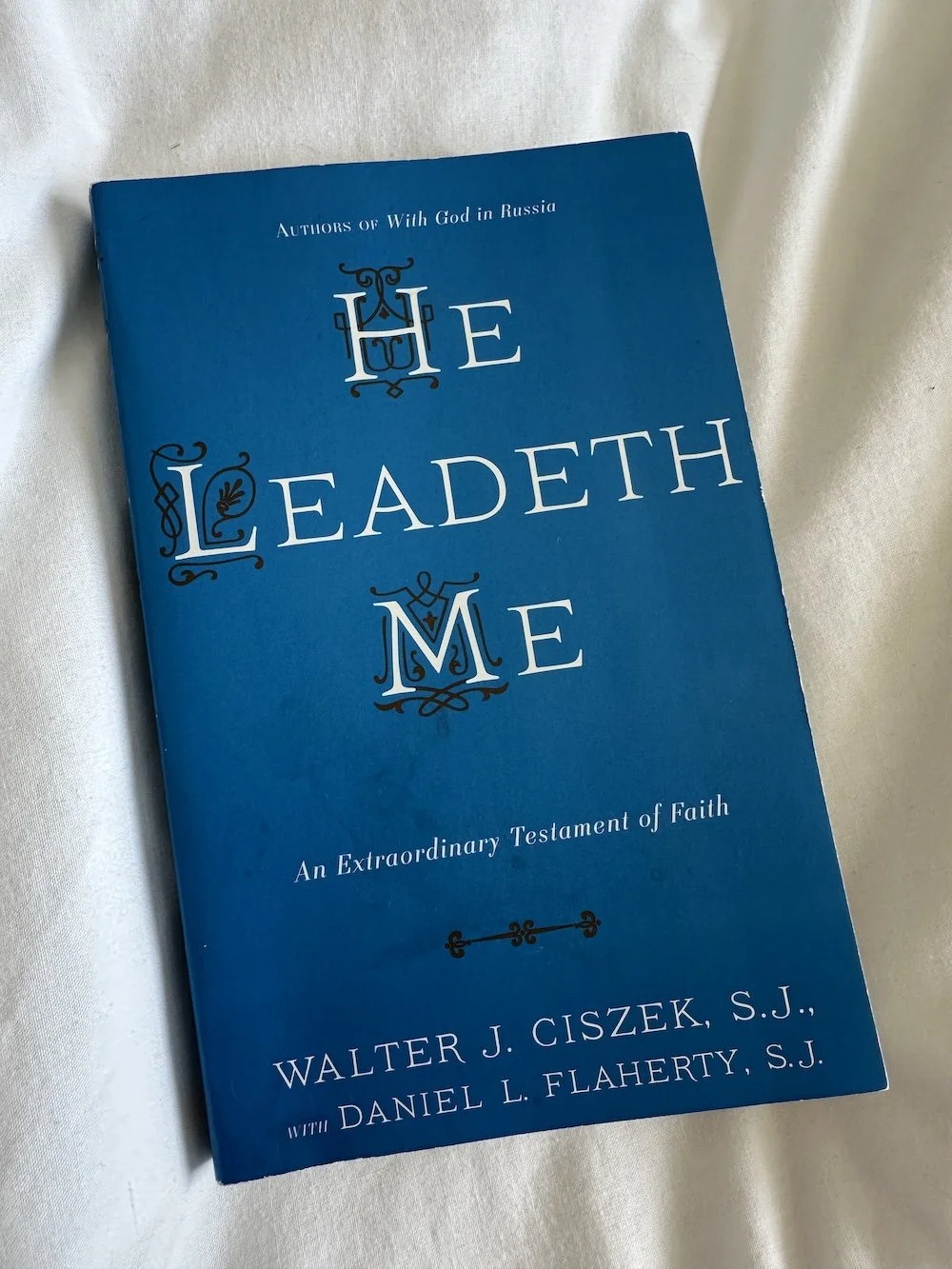
In episode 94 of This Whole Life, Kenna, Pat & Fr. Nathan kick off their Lenten book study on He Leadeth Me by Fr. Walter Ciszek. In part 1, they dive into the prologue through chapter 7, reflecting on the meaning of suffering, the mystery of God’s providence, and the challenge of surrender. With humor and honesty, the trio relate Fr. Ciszek’s profound lessons on humility, discernment, and finding God in challenging moments. They explore the tension between faith and understanding, and the importance of authentic humility in everyday encounters. Tune in for practical insights, heartfelt stories, and a challenge to deepen your relationship with the Lord this Lent. Come back for Part 2 & 3!
Show Notes
Does suffering have meaning? Why does God permit suffering?
Suffering, for all of its pain, produces insight, perseverance, and wisdom
“The man who has not suffered – what does he know anyway?”
Rabbi Abraham Joseph Heschel
Friction maxing: purposefully choosing inconvenient, difficult things because our convenience-focused culture is making us selfish, soft, and weak
“Son though he was, he learned obedience from what he suffered; and when he was made perfect, he became the source of eternal salvation for all who obey him…”
Hebrews 5:8-9
How do I know that I’m really doing the will of God and not just following my own will?
There’s a common assumption among Christians: “If I want something, it must be bad.”
It is true that God’s will is more important than my will. It is false that, therefore, my desires are always bad.
“No situation is ever without its worth and purpose in God’s providence.” (pg. 47)
“It was agony for me as a priest to ask these questions, but it was impossible not to ask them…And I’m sure they came not to me alone. It was not a crisis of faith…It was rather a crisis of understanding, and no one need be ashamed to admit he has been troubled by it.” (pg. 19-20)
You don’t understand the will of God? Welcome to the club!
It’s entirely possible to not understand - or enjoy - what God is doing, and still be faithful to His will
“Nobody wanted to talk about religion, let alone practice it.” (pg. 35)
“He was asking me to forget about my powerlessness against the system and to look instead to the immediate needs of those around me this day, in order that I might do everything that it was in my power to do by prayer and example.” (pg. 49)
“Learning the full truth of our dependence upon God and our relation to his will is what the virtue of humility is all about…And what we call humiliations are the trials by which our more complete grasp of this truth is tested. It is self that is humiliated; there would be no ‘humiliation’ if we had learned to put self in its place…And the stronger the ingredient of self develops in our lives, the more severe must our humiliations be in order to purify us.” (pg. 71-74)
“Humility is truth, the full truth, the truth that encompasses a relation to God the Creator and through Him to the world He has created and to our fellow man. Humility is truth.” (pg. 73)
Find Fr. Walter Ciszek’s reflection on the Our Father on pgs. 62-63
IYKYK
Challenge By Choice
Pray the Our Father slowly, intentionally, with faith & gratitude
Savor every line, even every word, and meditate on them
What do these specific words mean for you?
Have a conversation with the Lord through the prayer that He gave us
Reflection Questions
For personal reflection or group discussion
What is one specific thing that stuck with you from this conversation?
When have you been through suffering? What have your learned or gained through suffering?
How do you distinguish God’s will from your will? Do you assume that your desires are always good or bad?
How does evangelization require “seeing the other”? When have you seen that in your life?
How do you define humility? How do you experience humility in others and in yourself?