
Show Notes
Episode 95. He Leadeth Me, Part 2
Episode 95. He Leadeth Me, Part 2

“We were subjected to conditions that were deplorable, even subhuman, and yet I was delighted simply to be with people once again.”
~ Fr. Walter Ciszek
Why do we long so deeply for human connection?
What does suffering reveal about our humanity?
How can community become a source of grace?
In episode 95 of This Whole Life, Kenna, Pat, and Fr. Nathan continue their Lenten book study on He Leadeth Me by Fr. Walter Ciszek. In part 2, they explore chapters 8 through 14 and reflect on Ciszek’s experiences after leaving solitary confinement and being sent to a Siberian labor camp. The conversation touches on the human need for connection, the dignity of the body, and how even the most difficult work can become a path to holiness when united to God’s will.
Together they unpack powerful themes from the book including gratitude for the human body, finding meaning in suffering, the dignity of work, and the hidden beauty of priestly ministry in the midst of hardship. They also reflect on the extraordinary lengths priests went to celebrate the Mass in secret and how Ciszek’s faith transformed even the harsh realities of the labor camp into opportunities for grace. Tune in for a thoughtful conversation about discovering God’s presence in the ordinary and difficult moments of life.
Show Notes
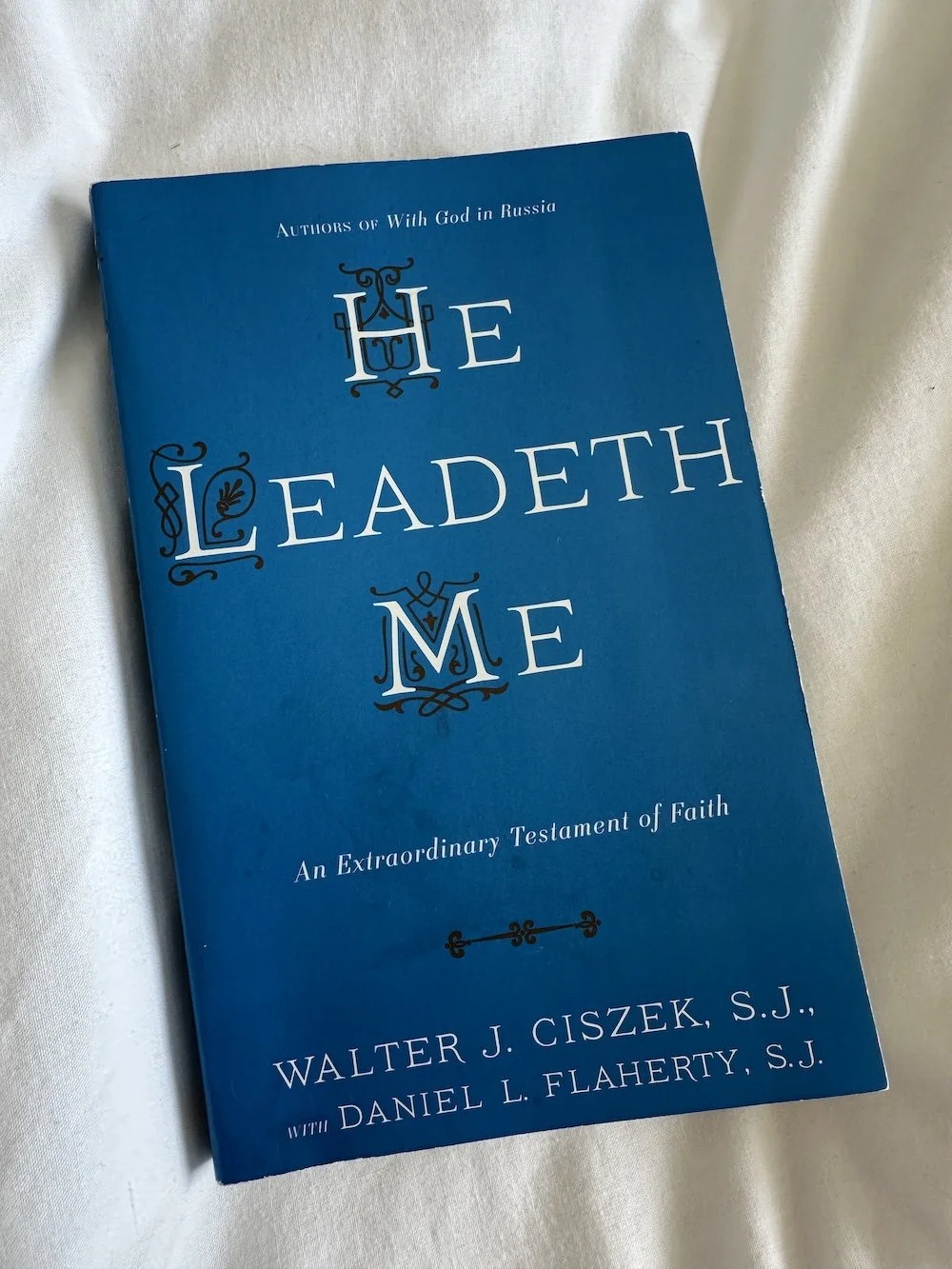
“...we were subjected to conditions that were deplorable - even subhuman - and yet I was delighted simply to be with people once again.” (p. 86)
“This tendency to look on human nature, especially so-called ‘fallen human nature,’ as ignoble and debased, sinful, and therefore contemptible, in constant need to be checked and controlled by the nobler part of man, has remained in some form or other as part of traditional Christian spirituality. And I think it is wrong. It is Gnosticism and Manichaeism and Catharism and Albigensianism and Jansenism and every heretical tendency that sees matter as evil and the flesh as prone to evil. For whatever reason, it is always the poor old body that gets the worst of it, as if the mind and the will never had any sinful thoughts or inclinations, as if sin did not consist precisely in setting one’s will (not the body) against God’s will.” (p. 98)
“For each of us, salvation means no more and no less than taking up daily the same cross of Christ, accepting each day what it brings as the will of God, offering back to God each morning all the joys, works, and suffering of that day. But those are abstract words. What it means, in practice, is spelled out as always by the poor old body. … and when at last we are parted from it in death, it surely deserves whatever rest it can get before it rises to be glorified at the last judgment.” (p. 101)
On his work in the labor camp: “And yet I did take pride in it. I did each job as best I could. I worked to the limit of my strength each day and did as much as my health and endurance under the circumstances made possible. … The labor I did was not a punishment, but a way of working out my salvation in fear and trembling. Work was not a curse, even the brutish grunt work I was doing, but a way to God - and perhaps even a way to help others to God. I could not, therefore, look upon this work as degrading; it was ennobling, for it came to me from the hand of God himself. It was his will for me.” (p. 106)
“This simple truth, that the sole purpose of man’s life on earth is to do the will of God, contains in it riches and resources enough for a lifetime. Once you have learned to live with it uppermost in mind, to see each day and each day’s activities in its light, it becomes more than a source of eternal salvation; it becomes a source of joy and happiness here on earth.” (p. 123)
“The grinding routine of daily labor, even here in Siberia, could have a meaning, did have a value, even as the lives of all men everywhere - no matter how dull or routine or insignificant they might seem to the eyes of men - have a value and a meaning in God’s providence.” (p. 148)

Fr. Nathan’s Argentinian diamond pizza really does exist
Challenge By Choice
Reflecting upon suffering and moving toward gratitude
Take the time to reflect upon a painful experience in your past, one that you would go back and change if you could.
Can we go back and look at those honestly? Is it possible to ask: has that at all added value and sanctification to me?
Is it possible to even have some gratitude for the ways you have grown in response to that suffering?
Reflection Questions
For personal reflection or group discussion
What is one specific thing that stuck with you from this conversation?
What are your experiences with isolation and community? Do you desire greater communion with others? What stands in the way of deeper relationships?
Who are the people in whom it is most difficult to see dignity and value? How might you move toward greater empathy and love for your enemies?
What strikes you about Fr. Ciszek’s reflection on the body? What is your relationship with your body, and how does that impact your relationship with God?
What kinds of work are you called to at this point in your life? Do you find that work to be valuable and dignified? What does God have to say about this work?